Silent Shark Evading Destroyers
Survive escort counter-attacks after your torpedo hits — or misses — using depth, silence, and thermal layers.
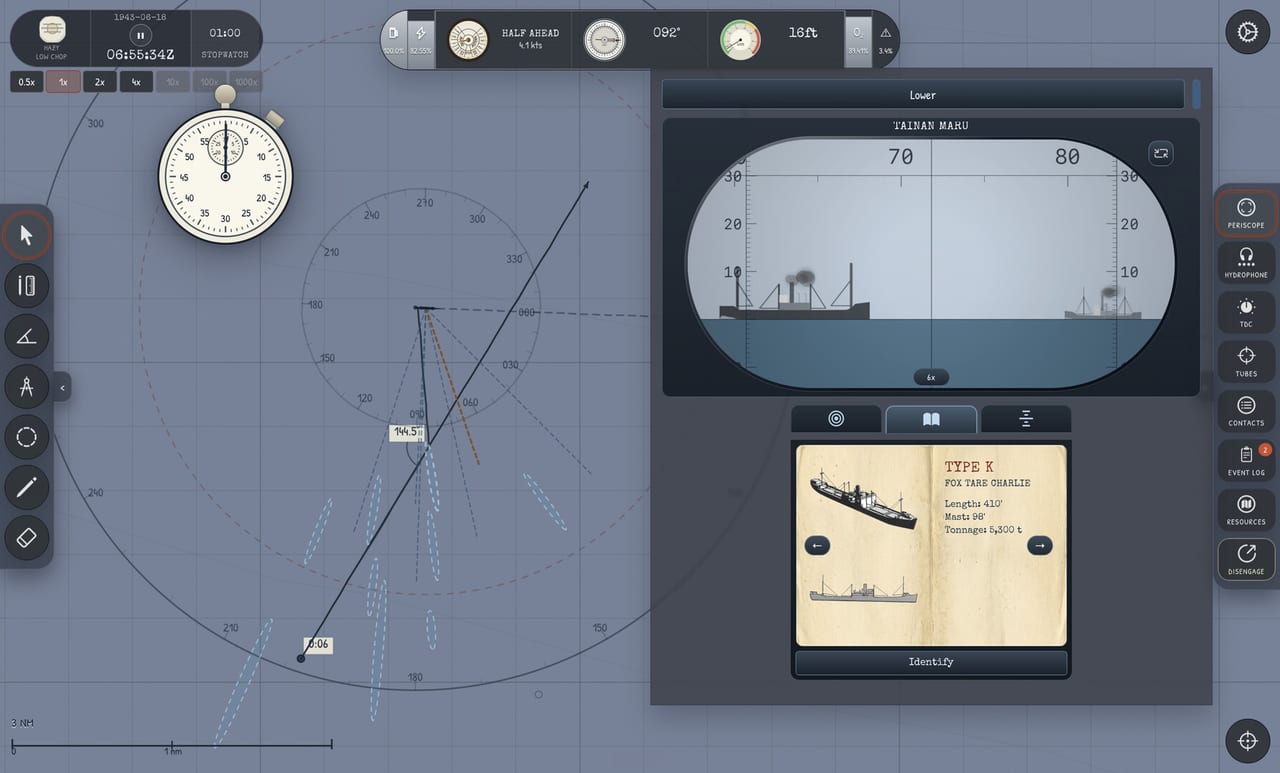
Destroyer escorts are Silent Shark’s punishment for sloppy attacks. This guide covers evasion doctrine after convoy or single-ship engagements: how escorts search, when to run silent, when to drive deep and fast, and how thermal layers from the bathythermograph help or hurt your escape. It complements the Advanced Tutorial Part 2 video embedded here and applies to demo encounters today and the full August 12, 2026 campaign.
Escorts are not scripted magnets. They react using hydrophone listening, sonar predictions, and their own chart of where you probably are after a torpedo wake, flooding noise, or periscope sighting. Treat every post-attack minute as a second game you can lose independently of your hit rate.
What triggers aggressive search
Common escalation triggers include:
- Torpedo explosion — even a miss alerts the screen.
- Tube flooding clicks heard at close range.
- Periscope exposure spotted visually or on radar in later-war scenarios.
- Noisy depth or speed changes while inside escort listen range.
Plan egress before firing. Know your first deep leg and which layer you will hide in — see Thermal Diving.
Immediate post-fire actions (first 60 seconds)
- Lower periscope — non-negotiable.
- Go deep toward a prepared safe depth, but avoid slamming planes if you can — sudden cavitation is audible.
- Slow to silent speed once below layer if bathythermograph shows a useful boundary.
- Turn offensively — move off the torpedo bearing and away from the convoy track, not along it.
The tutorial video demonstrates a baseline pattern; adapt for rain and night where visual escort cues disappear but passive listening intensifies.
Silent vs speed evasion
| Mode | When | Risk |
|---|---|---|
| Silent slow | Escort overhead, good layer above you | Drift into mineable depth if shallow |
| Hard deep flank | Open ocean, poor layer, escort distant | Noise spike alerts secondary escorts |
| Knuckle then silent | Near miss on depth charge | Escort may predict turn direction |
Silent Shark does not reward one trick forever. Escorts adjust search legs; if you repeat the same 90° turn every time, expect pattern depth charges on the third attack of a session.
Thermal layers and the bathythermograph
Bathythermograph readings show temperature breaks by depth. Hiding below a sharp layer can attenuate escort active sonar — at the cost of colder, slower maneuvering. Crossing a layer noisily announces your transition.
Read Thermal Diving for regional and time-of-day variation. Demo scenarios include day/night and weather toggles — practice evasion in rain where layers still matter but visual periscope ID earlier was harder.
Hydrophone awareness while evading
Keep one ear on escort screws while executing evasion. High RPM means sprint; intermittent silence means listen phase. Merchant screws fading is good; multiple high-RPM contacts converging is bad — you may have attracted a second escort from the far side of the convoy.
Hydrophone Tracking explains pitch differences between merchants and warships.
Depth charge discipline
When charges fall:
- Do not panic climb unless depth exceeds test depth — test depth warnings are serious in full campaign resource models.
- Assess pattern — single erratic drops vs bracketing. Bracketing means they have a line on you; change depth layer and course together.
- Wait out the search — many players lose because they surf too early. Escorts leave after timed search boxes; surfacing into a lingering destroyer is worse than holding five more minutes.
Convoy-specific geometry
Convoys compress escorts toward the center after a hit. Escaping down the side of the convoy track often beats running directly away on the torpedo leg — escorts expect the latter. Chart your escape on the map tools during approach, not after explosions.
First Patrol integrates pre-planned egress routes.
Training scenarios
Use the demo scenario generator:
- Hard convoy, rain, night — forces evasion without crutches.
- Single escort merchant — isolate listen vs sprint phases.
- Repeat until you survive three consecutive attacks without exceeding test depth or surfacing early.
Links for the complete attack loop
- How to Use the TDC — fewer misses mean fewer enraged escorts.
- Four Bearings — better approach geometry reduces time inside the screen.
- Attack Checklist — includes an egress section timed to firing.
Evasion is where Silent Shark feels most like a real Pacific patrol — not the torpedo hit montage. Respect escorts and the August 2026 campaign will feel fair rather than random.
Frequently Asked Questions
Quick answers to the most common Silent Shark questions.
Why do destroyers find me even when I go deep immediately?
Noise from flooding, sharp plane changes, or predictable turn sectors gives them a search box. Pre-plan a quiet deep leg and use thermal layers when available.
Should I stay deep after escorts stop dropping charges?
Usually yes — wait until screw noise fades on the hydrophone. Surfacing early into a lingering escort is a common demo failure.
Does evasion work the same in the full campaign?
Yes. Escort AI and sonar models are shared with the demo. Campaign adds resource pressure if you take hull damage from near misses.