Silent Shark Hydrophone Tracking
Hear the convoy before you see it — bearings, pitch, and classification cues on the passive sonar station.
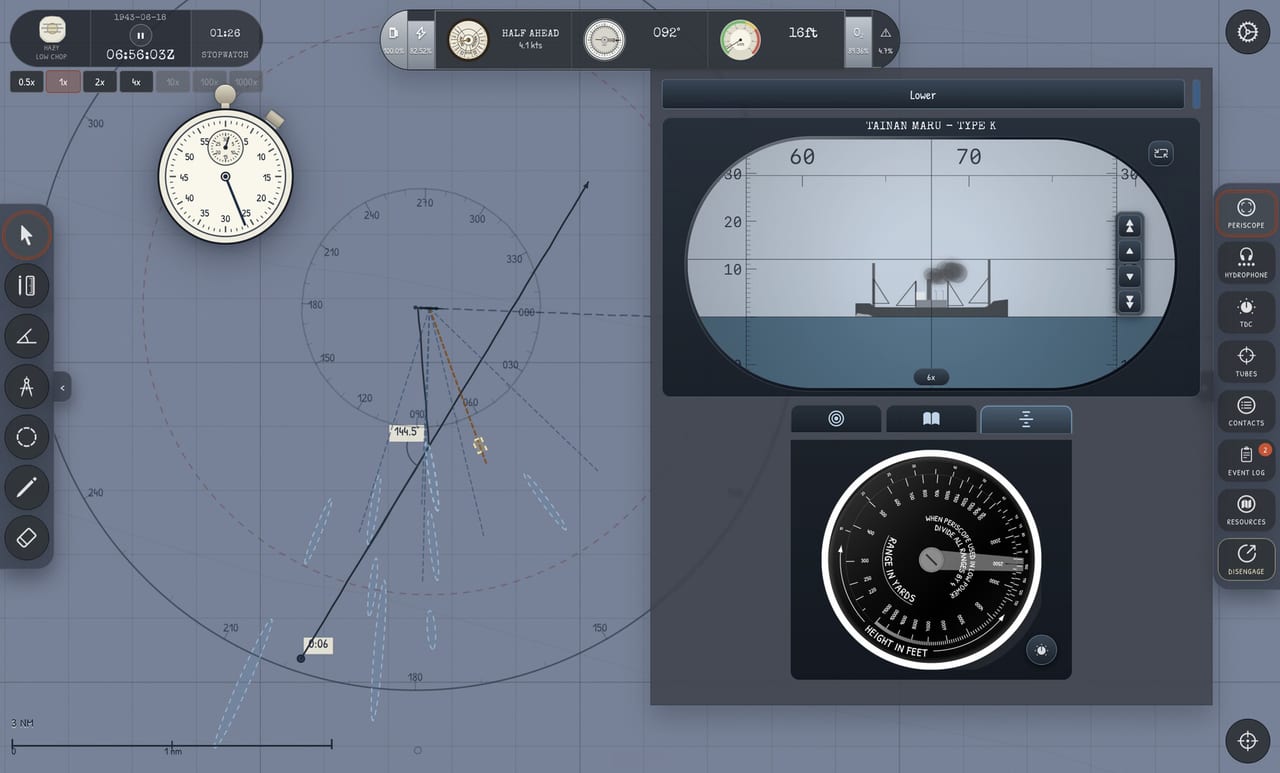
The hydrophone is Silent Shark’s earliest warning system. Before periscope identification or stadimeter range, you often have only bearing and sound character — merchant screws versus escort turbines, speed hints from pitch, maybe multiple contacts in a convoy screen. This page explains the hydrophone station in depth; plotting technique is in Four Bearings and evasion listening in Evade Destroyers.
Silent Shark is single-player and map-first. The hydrophone never replaces the chart — it feeds it. Every contact story begins as sound, becomes lines on paper, and only later earns a periscope look or TDC commit.
What the hydrophone provides
- Relative bearing to contact from your bow, read against the compass rose on the station.
- Audio texture differences between ship types — RPM steadiness, pitch, harmonics.
- Multiple contacts separated by bearing spread in convoy scenarios.
- Rate-of-bearing-change hints when combined with timed observations on the chart.
It does not give range directly. Range comes from chart plotting over time, stadimeter cuts, or both. Treating a hydrophone bearing like radar range is the fastest path to a missed torpedo and an angry escort.
Station operation in practice
Open the hydrophone when your speed is stable enough that own-ship noise will not dominate. At flank speed you may still hear loud merchants, but subtle escort sprint phases hide in your wake noise. Many skippers reduce speed for the first bearing series, accept slower closure, and restart the engine leg only after four bearings produce a track.
Relative bearing is reported from your bow — 000° is dead ahead, 090° starboard beam. Translate immediately to an absolute line on the Map Tools chart from your last timestamped position. If you turned between contact and plot, the line is wrong before you even begin.
Bearing discipline
Log every bearing on the tactical chart with a timestamp. Single bearings lie about target motion — only time series reveal course and speed. Use equal observation intervals when possible for cleaner four bearings solutions.
Write sim time beside each mark: T+0, T+4min, T+8min. Uneven gaps distort speed estimates exactly when you need confidence to descend to periscope depth. The in-game stopwatch station pairs well with hydrophone work — see Stations.
When bearings jump, ask whether the target turned or you mis-plotted own motion. Zigzagging merchants produce fanning lines; a single sharp jump may mean an escort crossed between you and the convoy core.
Classification by ear
Merchants often present lower, steady screw noise — rhythmic, heavy churn. Destroyers can show higher pitch and aggressive RPM changes when sprinting to a datum after a torpedo explosion or suspected contact. Tankers and large freighters can sound deceptively loud; small escorts sometimes hide under louder merchant bearings until they sprint.
Practice in demo standalone encounters with convoy compositions until you can predict which bearing is the payoff target versus the punishment escort. Night and rain scenarios reduce visual confirmation — hydrophone classification becomes your primary target selection tool before any scope raise.
Convoy screens and target selection
Convoys present multiple bearings within minutes. Policy for first patrols: track the center merchant or the highest-value ship on your mission brief, not the nearest screw. Nearest is often an escort whose intercept geometry leads you into the screen.
Use bearing spread to infer formation width. Narrow spread may mean column; wide spread may mean loose merchant pairs with outriding escorts. Either shape changes your intended AoB at firing moment — see How to Use the TDC.
Own-ship noise
Your speed and depth changes affect what escorts hear too. Flooding torpedo tubes and cavitation from hard turns propagate. Hydrophone awareness is bidirectional — assume destroyers use similar listening during search phases described in Evade Destroyers.
Silent running is not a button — it is speed and depth discipline. After firing, escorts listen for your screws while you listen for theirs. The same station that found the merchant now tells you whether the search is ending or tightening.
Integration with map tools and TDC
Transfer bearings to Map Tools lines immediately. Delayed plotting is a common beginner error when time compression is high. Each line should connect to a future TDC speed and bearing input — if you cannot explain which line produced which number, wait before flooding tubes.
Demo vs full campaign
The free demo includes full hydrophone behavior in tutorials and encounters. The August 12, 2026 full release adds patrol radio hints that tell you where to listen first — see Patrol Radio — but bearings still require verification. Radio saves search time; hydrophone saves your boat.
Training drills
- Single merchant, clear day — four bearings only, no periscope until plot complete.
- Convoy with one escort — classify all bearings before choosing intercept target.
- Post-attack evasion — hydrophone only for five sim minutes; note escort sprint cadence.
Related
- Getting Started — first contact tutorial.
- Periscope Observation — after bearings converge.
- Systems Hub — full instrument list.
- First Patrol — integrated sortie flow.
Hydrophone workflow on the chart
Open the hydrophone station, take a clean bearing, then immediately drop a timestamped mark on the map tools chart. Do not stack five bearings in your head. Silent Shark’s difficulty comes from imperfect information; your notes are the antidote. When multiple screws fill the audio, rotate slowly across the bearing arc and label merchants versus escorts as best you can before choosing an intercept target.
If pitch rises suddenly on a previously quiet bearing, assume an escort is sprinting — that is often the moment to abort a shallow approach and reconsider geometry. The four bearings method still works, but you may need a longer baseline and a quieter own-ship speed while collecting.
Own-ship noise and listening quality
Hydrophone clarity depends on your own racket. High telegraph settings, rapid depth changes, and tube flooding all degrade what you hear and what escorts hear from you. During bearing collection, prefer steady course and moderate speed. Save flank for evasion windows described in evading destroyers, not for “getting one more bearing faster.”
Night and weather scenarios change visual confirmation, so hydrophone discipline becomes the entire early approach. Practice rain encounters only after you can plot four clean bearings in clear weather without time-compression panic.
Convoy screens and false payoffs
Convoy scenarios place juicy merchants behind or between escorts. The loudest contact is not always the best first torpedo. Plot the screen, identify which bearings belong to destroyers, and plan an approach that keeps escorts on the far side of your intended track. That planning is chart work first, audio second.
Campaign radio cues
In the full Pacific campaign, radio intelligence may hint where to listen — see patrol radio. Treat those cues as search boxes, not free contacts. You still need hydrophone bearings and chart geometry before the TDC earns a fire command.
Frequently Asked Questions
Quick answers to the most common Silent Shark questions.
Can the hydrophone tell me target range in Silent Shark?
Not directly. Use bearing plots over time and the stadimeter for range. Hydrophone gives direction and classification hints.
How do I tell merchants from destroyers on the hydrophone?
Merchants tend toward lower, steadier screw sounds. Escorts often have sharper pitch and aggressive RPM changes when sprinting.
Should I keep the hydrophone station open during evasion?
Yes. Escort screw noise tells you whether to stay deep or if the search is ending — critical during [Evading Destroyers](/guides/evade-destroyers/).