Silent Shark Stadimeter Range Estimation
Measure distance through the periscope when radar does not exist — mast height, angle, and TDC-ready range.
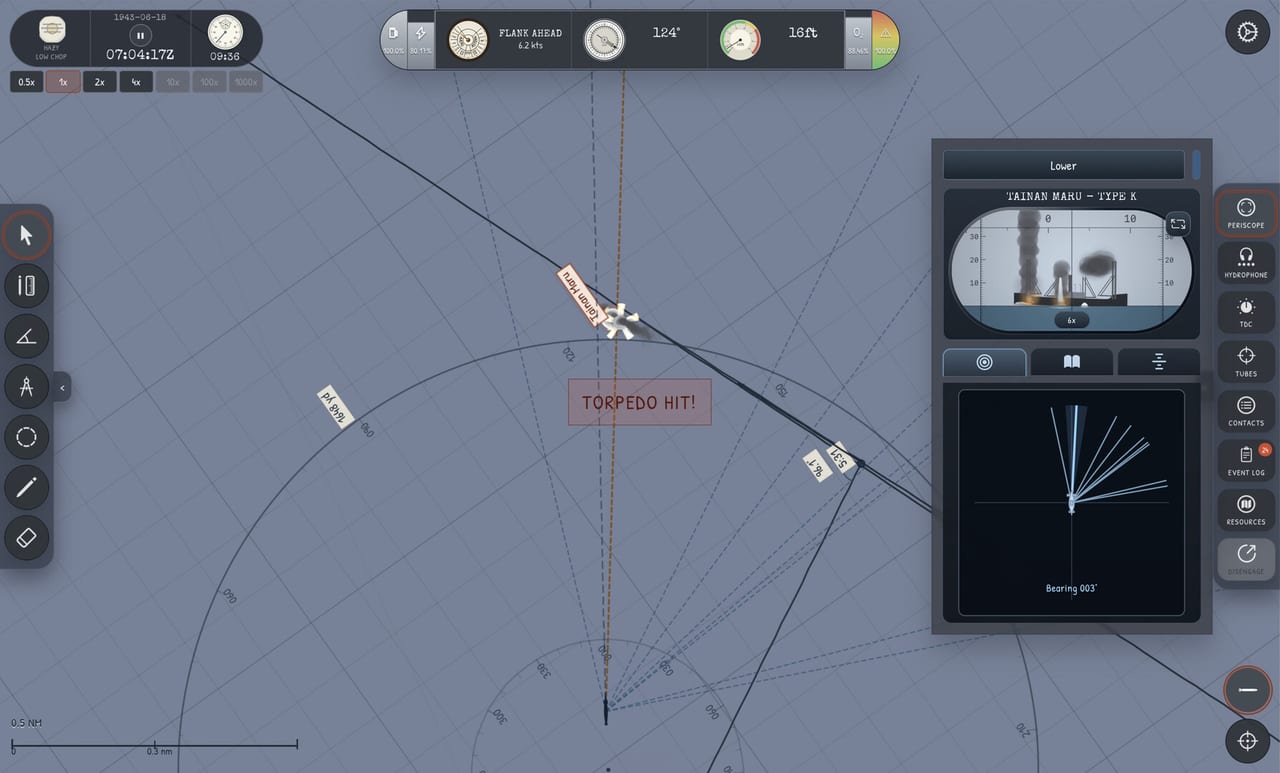
Before laser rangefinders, submarine officers estimated distance with a stadimeter — comparing a ship’s known mast height to the angle subtended at the periscope. Silent Shark models this fully: identify the class, pull mast height, observe the angle to the mast top, and receive a range output you can feed the TDC. This guide explains reliable stadimeter technique for demo encounters and the August 12, 2026 full release campaign.
Range error is the silent torpedo miss. Speed and bearing mistakes hurt, but a range input wrong by twenty percent often sends fish under or over the target even when AoB looks perfect on the scope.
Stadimeter workflow overview
- Raise periscope briefly at periscope depth.
- Identify ship class — freighter type, tanker, small merchant — using silhouette and recognition hints.
- Select mast height associated with that class in the stadimeter UI.
- Align the stadimeter graticule to the mast top while keeping the hull near the horizon reference.
- Read range and enter into TDC, refreshing after target turns or your closure changes apparent angle.
Cross-read Periscope Observation for exposure discipline and How to Use the TDC for entering range into the Position Keeper.
Ship identification matters
Wrong class means wrong mast height, which means wrong range. Spend identification time on the first look, not after you already committed emotionally to firing. Common demo merchants have distinct superstructure blocks — learn them in clear weather before tackling rain and night scenarios where ID takes longer.
If identification is uncertain, take a second short look rather than guessing a taller mast — overestimated height underestimates range, sending torpedoes long.
Angle measurement tips
- Keep the scope steady — rolling affects angle. Match sea state; in heavy seas, prefer plot-derived range if geometry allows.
- Snap looks — the stadimeter works on quick observations; you do not need to stare for thirty seconds if class is known.
- Update after turns — apparent mast angle changes when target course shifts relative to you.
Combining stadimeter with plot range
Skilled players cross-check stadimeter output against chart plot distance at the moment of observation. If stadimeter says 2500 yards but your intercept geometry suggests 4000, pause. Either bearings were wrong (Four Bearings) or identification was wrong.
When both methods agree within tolerance, TDC solutions stabilize faster and spread can tighten, saving torpedoes for campaign logistics in the full game — see Resources.
Weather and visibility effects
Rain, fog, and night reduce periscope clarity. You may need to:
- Close nearer before a reliable stadimeter cut — higher escort risk.
- Use broader spread when range confidence is lower.
- Abort if ID fails twice — living to plot another day beats a blind shot in campaign reputation models.
Sea state also affects how much of the hull is visible at a given range — experience calibrates this faster than any table.
AoB and range together
Stadimeter range pairs with angle-on-bow from the same look. Update both TDC fields from one periscope session when possible to avoid inconsistent snapshots.
Bow shots with uncertain range are high-risk; beam shots tolerate small range error better. Choose attack geometry accordingly on the chart before descending.
Practice progression
| Session | Goal |
|---|---|
| Clear day, single merchant | ID + stadimeter within 5% of tutorial truth |
| Rain encounter | Two-look ID protocol |
| Convoy | Stadimeter on intended victim only, not nearest ship |
Standalone demo scenarios let you spawn ideal weather — use them for stadimeter drills, then stress-test in First Patrol flow.
Common mistakes
- Using last sortie’s class when the spawn changed.
- Measuring to the funnel instead of mast top when UI expects mast reference.
- Stale range after aggressive closure between look and fire.
- Ignoring own-ship motion — closure changes subtended angle even if target speed is constant.
Related systems and guides
- Map Tools — plot cross-check.
- Getting Started — first periscope exposure habits.
- Evading Destroyers — why long periscope time hurts after you finally have range.
Stadimeter mastery turns Silent Shark from a guessing game into a measurement game — the design John Goering emphasizes in preview materials. Invest an hour here in the full campaign and campaign merchants will feel fair, not random.
Frequently Asked Questions
Quick answers to the most common Silent Shark questions.
What happens if I pick the wrong mast height in Silent Shark?
Range calculates incorrectly — usually torpedoes miss long or short. Re-identify the ship class before flooding tubes.
Can I attack without the stadimeter?
Chart plot estimates can substitute in a pinch, but stadimeter cuts are more precise for TDC range at periscope depth.
Does the stadimeter work at night?
Yes, but identification is harder. Expect shorter looks and lower confidence — consider wider spread or closing for a clearer silhouette.